
Challenging behaviour support across London and Essex
Challenging Behaviour Supported Living
Calm, skilled and consistent support for adults whose behaviour challenges services, built on understanding what each person is communicating and helping them feel settled, safe and in control.
- CQC rated Good
- Adults aged 18 to 64
- Teams across London and Essex
Behaviour Is Communication
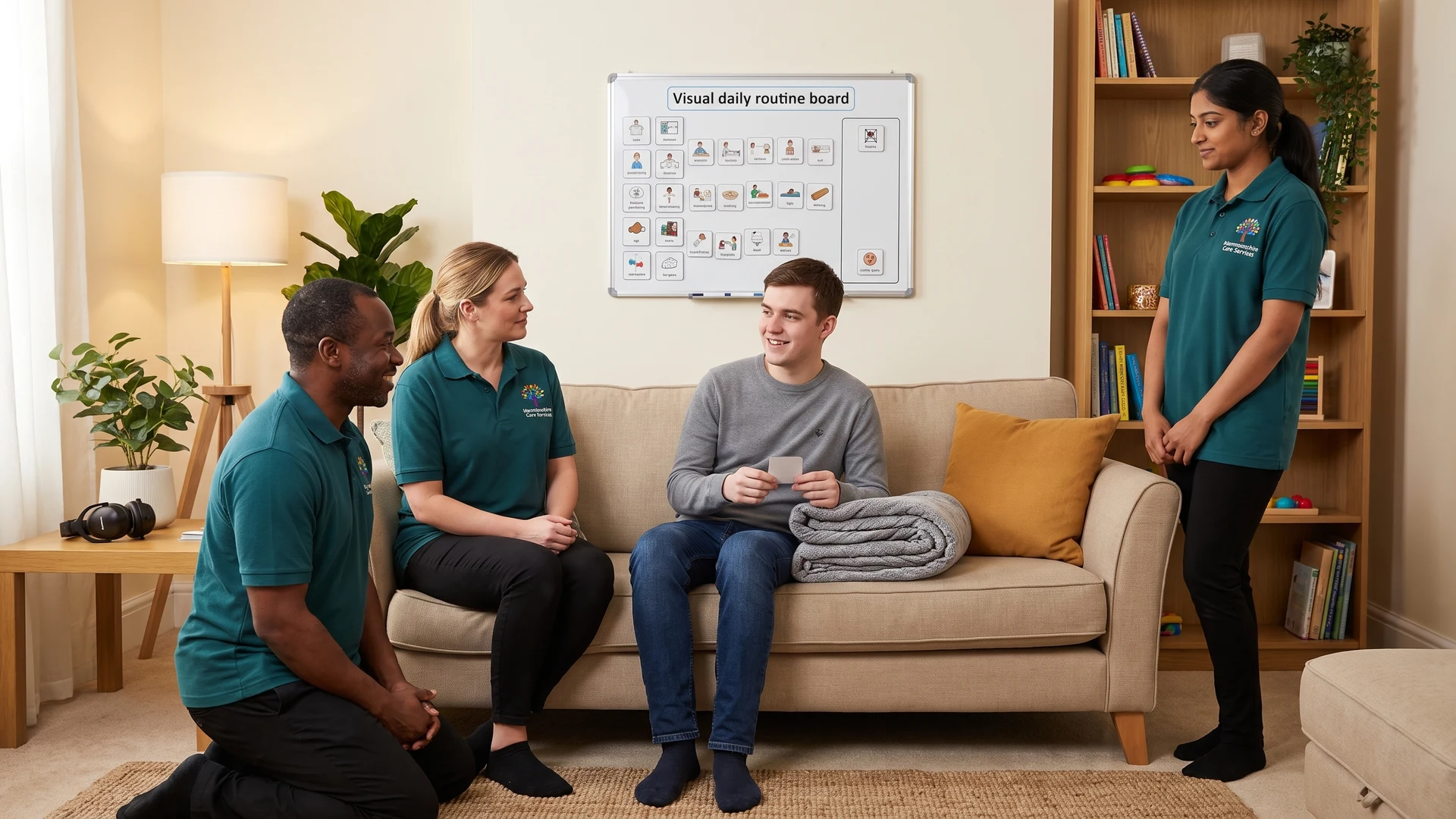
When someone cannot easily tell us that they are in pain, anxious, overwhelmed or unhappy, they may show us through their behaviour. That behaviour is often described as challenging, but it is usually a person doing their best to communicate an unmet need.
Our job is to understand what is being communicated. We take time to learn what matters to each person, what makes a good day and what makes a hard one, then shape support and the home environment around that. When people feel understood, safe and in control, distress usually reduces.
Who We Support
We support adults aged 18 to 64 across London and Essex, including people who:
Have a learning disability, autism or both, and behaviour that challenges services
Are moving on from hospital, an assessment and treatment unit or another service
Need a consistent, skilled team who understand their triggers and what helps
Communicate distress through their behaviour rather than through words
Have had placements break down in the past and need a more stable approach
We welcome referrals from social workers, commissioners, psychologists and health professionals, as well as enquiries from families.
How We Support People Whose Behaviour Challenges
Behaviour is communication
We work to understand what a person is telling us through their behaviour, rather than treating the behaviour as the problem.
Positive behaviour support
Support plans focus on meeting needs, building skills and changing the environment, never on restriction or control.
Knowing the early signs
We learn each person's early signs of distress and agree the things that help them feel calm again quickly.
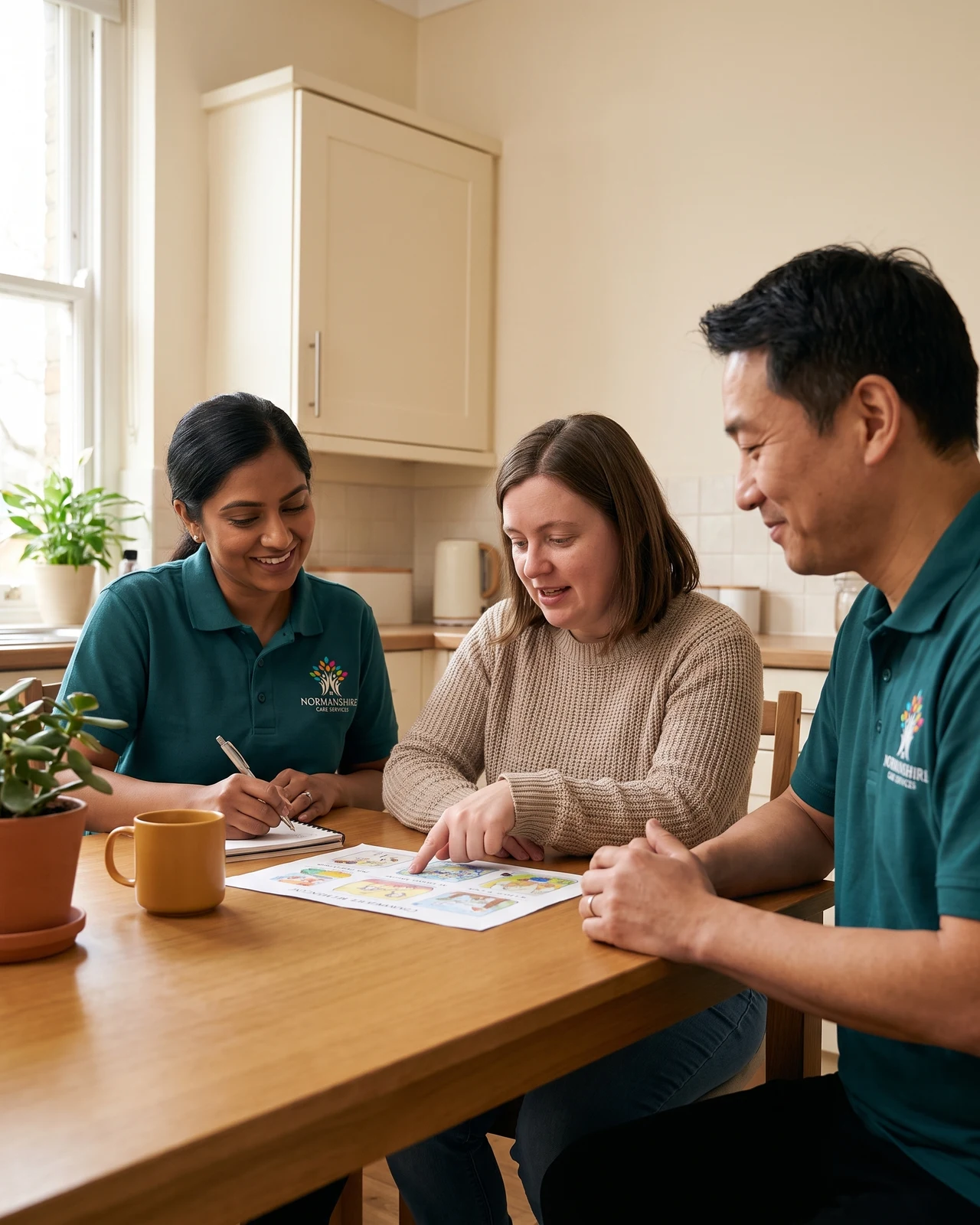
Predictable routines
Clear, consistent routines and careful preparation for change help reduce anxiety before it builds.
Consistent, skilled teams
Familiar faces who know the person well make support safer, calmer and more effective for everyone.
What Day-to-Day Support Can Include
Depending on each person's needs and goals, support can include:
Personal care: washing, dressing and grooming at a pace that feels comfortable
Daily living: cooking, shopping, cleaning and keeping a settled home
Health: medication support, appointments and working with health professionals
Structure: predictable daily routines with activities the person enjoys
Communication: using the person's preferred way of communicating every day
Community: building confidence in places and activities that suit them
Relationships: keeping family contact and friendships going
Looking for challenging behaviour support with Normanshire Care?
Our Approach
Person-centred planning
Plans are built around the person's strengths, preferences and goals, not around their diagnosis.
Least restrictive practice
We always look for the least restrictive way to keep someone safe and support their choices.
Working together
With consent, we work closely with families, social workers, psychologists and health teams.
Learning and reviewing
We review what is working and what is not, and adjust support as we learn more about the person.
What Makes Our Support Different
Consistent teams, so people are supported by staff who genuinely know them
Careful matching, we introduce new staff gradually and thoughtfully
Environment first, we adapt the home and routine before expecting the person to change
Skilled support, staff are trained to understand behaviour and respond calmly
Families involved, families often know best what helps, and we listen, with consent
Stability, our aim is a settled, lasting home, not another short-term placement

Our Referral Process
Get in touch
Call us, send an enquiry or submit a professional referral.
Initial conversation
We talk through the person's needs, history, triggers and what has helped before.
Assessment
We meet the person somewhere they feel comfortable, and with consent their family and professionals.
Support plan
We agree a positive behaviour support plan together, including a gradual introduction to the team.
Support begins
Support starts with familiar faces, and we review progress regularly as we learn more.
Challenging Behaviour Support FAQs
It describes behaviour that puts a person or others at risk, or that makes it harder for someone to take part in everyday life. We see behaviour as communication, so our focus is on understanding what the person needs rather than on the behaviour itself.
Speak to Our Specialist Support Team
Tell us about the person and the support they need, and our team will contact you to talk through the next steps.
If there is an immediate risk to life, call 999. For urgent safeguarding concerns, contact your local council's safeguarding team or the police. Please do not share medical records through this form.